
Published 25 May 2026 · 3 min read
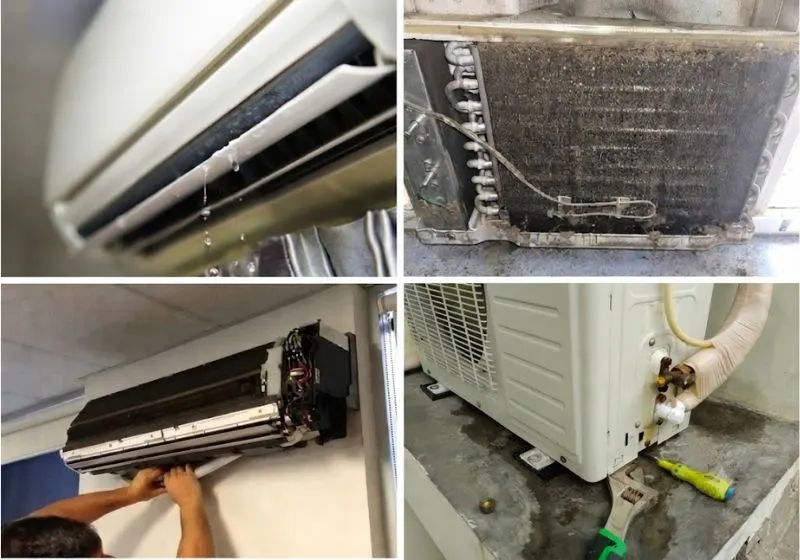
AC water leaking from the indoor unit is most often caused by a clogged drain pipe, though it can also come from a dirty filter causing coil icing that later melts and overflows, low refrigerant causing the same icing issue, or — in older units — a cracked or rusted drain pan.
Dust, algae or debris build up inside the drain pipe over time, blocking the path condensation normally takes to drain outside. When it's blocked, water backs up and overflows from the indoor unit instead. This is the single most common cause of indoor leaking and often the easiest to fix.
A few quick checks can sometimes save you a service visit, or at least tell the technician exactly what to look for.
If the drain pipe is clear, the filter is clean, and there's no visible ice, the cause is likely internal — a cracked drain pan (common in older units), an improperly sloped installation, or low refrigerant causing icing you can't see without opening the unit. These need a technician's inspection rather than a DIY fix.
It's the most common cause, but not the only one — a dirty filter causing coil icing, low refrigerant, or a damaged drain pan can all cause the same symptom.
If the blockage is near the outdoor end and easily reachable, a gentle clear (like a soft brush or compressed air, not force) can sometimes work, but a persistent or internal blockage is best left to a technician to avoid damaging the pipe.
For a short period while you investigate, it's usually fine, but continued leaking can damage walls, ceilings or flooring over time, so it's worth addressing rather than letting it run indefinitely.
AC running but not cooling? Here are the 10 most common reasons in Hyderabad's climate, what you can check yourself, and when it's time to call a technician.
Read more →TROUBLESHOOTINGAC keeps tripping the MCB or circuit breaker? Here are the most common causes — from overloaded circuits to a failing capacitor — and what to do next.
Read more →TROUBLESHOOTINGHow to spot AC gas leak symptoms early — hissing sounds, ice on the coil, weak cooling — before low refrigerant damages your AC's compressor.
Read more →Tell us the symptoms and your locality — we'll send a technician to diagnose it properly.